415-595-5348



updated January 07, 2016
Originally this post was a book review of my friend Dan Moughamian’s 100 Essential Techniques for Lightroom, Photoshop and Adobe Camera Raw. It offered a unique way to learn, but much has changed since it was published. We are now in the cloud, and we have mobile workflows. Dan hasn’t published an update to his book, but if he does I’ll mention it here. Otherwise, here are some suggested options in order with updated links.
PhotoShop and Lightroom can be learned in several ways:
1) Adobe Learn & Support tutorials
Great place to start for the essentials! Choose your software, pick a category, and dive in.
2) Get a 400 page PhotoShop bible.
These books cover everything! It requires a lot of self discipline and a year of Sundays BUT you can become a master. My Photoshop bible is Adobe Photoshop for Photographers by Martin Evening. Now that Photoshop is updating it’s software often through the cloud, new versions of the book are released each year. Get it once, then just stay on top of new features as they are added. Dog ear the pages, and add Post-It notes for quick reference.
3) Videos subscriptions
If you prefer video tutorials try these pay to subscribe options: Lynda.com photography software tutorials or Kelby One videos
4) Take a class
A good balance between 2 and 5. Your time is well spent if you have goals, but it’s an on going time commitment.
5) Go to a workshop
Events are fun, however you’ll be upsold on DVDs and books. Naturally you’ll buy them because the workshop went by so fast.
6) Experiment and learn through trial and error.
You are probably going to destroy a few images, and will need to redo them once you learn the correct methods. There really are no shortcuts to learning so enjoy the process along the way. This can work well, but only if you combine 1 or 2 options from this list.
7) Youtube
People love to show off, and Youtube is a good place to learn special effects in Photoshop.
Note: I once took a class that only encouraged option #6. True. After years of screwing everything up, I tried option #5 which convinced me that I needed several versions of option #2.
Book review below (from 2011)
Recently friend and author Dan Moughamian came up with another option in his release of: Adobe Digital Imaging How-To’s: 100 Essential Techniques For PhotoShop CS5, Lightroom 3, and Camera RAW 6.
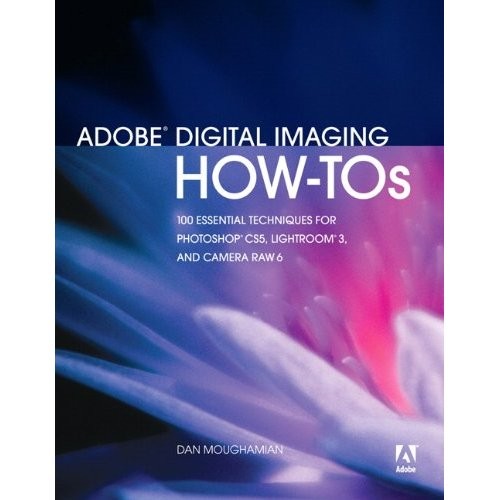
This text is geared toward beginners and intermediate users, but somehow Dan managed to include nearly something for everyone. For Lightroom, all the crucial info on importing, organizing, collections, developing, local tweaking with adjustment brushes, and exporting is covered. If you are new to LR this book will get you started! PhotoShop newbies get a run down on essentials like: preferences, Bridge (and mini Bridge), navigating inside PS, brushes, layers, and retouching techniques. They’ll also be able to jump right into the nuts and bolts of masking, selecting, HDR, brush textures with bristle tips/mixture brushes, creating lens blur, and stitching panoramas. Beginners will love the easy layout. The format of tips encourages you to jump in without overloading your brain and eating away your precious weekends.
Both CS5 and LR3 have been out for a while and it is easy to forget all the new things included with their release. Dan shows you the good stuff without slowing you down with a history and background of what life was like in the Dark Ages. He cuts right to the chase. Advanced users may even enjoy looking over the book as a guide to see what they don’t know or have forgotten. If you are a photographer, I’m sure you get asked all the time about what camera to buy. Do you ever get asked for help with software? If so, add some of the links below to your bookmarks.
4 Tips That May Have Slipped Past Your Radar (also in Adobe Digital Imaging How-To’s)
#44 Exporting Slideshows as Video in Lightroom.
Once your slideshow is set up in the Slideshow module, go to “Export Video Button” and choose a video preset according to your needs. The Develop module is so powerful that I wonder how many people overlook the Slideshow module? LR 3 has added the ability to export a slideshow into a self contained video complete with and intro, transitions, and ending page.
#54 Mini Bridge
If you are used to Bridge, you’ll have to remind yourself to try Mini Bridge. It behaves like a palette window inside PhotoShop allowing you to visually find files quickly. Click the icon panel that displays “Mb” on it to use Mini Bridge.
#80 Sharpening tool in PhotoShop CS5.
With the sharpen tool, check protect detail” in the options bar. Finally the sharpen tool becomes useful without causing the same nuclear pixel melting session that occurred in previous versions of PS.
#100 Image Processor
An oldie but goodie that is often overlooked. The Image Processor allows you to convert a group of images to JPEG, TIFF, or PSD format and/or resize them if needed. However instead of doing this through Adobe PhotoShop, I suggest selecting the images you want to address in Adobe Bridge then go to Tools–>PhotoShop–>Image Processor.
Overall: I would recommend this book to anyone getting started in Lightroom or PhotoShop and for seasoned vets who have skipped a version of LR or PS. Advanced users may thirst for more guru techniques, yet appreciate brushing up on tools that snuck past their radar. Dan is cool enough to recommend where to go next for anyone looking for more skills. For additional info about the book and author Dan Moughamian:
Adobe Digital Imaging How-To’s:
http://www.amazon.com


An alternate title for this post could be, “Dear Jess”
Jess – Or I could have called it “I wish I had a time machine.”
Hey there. This might be what I’m after but I can see this post is dated 2011, probably quite a few software releases ago… any thoughts on if your friend’s publication might still be helpful/ has released a new version? thank you..
@missfootloose You are right, and much has changed in Photoshop, Lightroom, and now mobile since 2011. Dan hasn’t published an update to his book, but if he does, I’ll mention it here. Otherwise I would suggest these 4 options in order:
1) Adobe Learn & Support tutorials Great place to start for the essentials!
2) A good book is still invaluable. My Photoshop bible is Adobe Photoshop for Photographers by Martin Evening. Now that Photoshop is updating it’s software often through the cloud, there are new versions of the book released each year. Get it once, and just stay on top of the new features as they are added.
3) If you prefer video tutorials try these pay to subscribe options: Lynda.com photography software tutorials or Kelby One videos
4) Youtube – People love to show off and this is a good place to learn special effects in Photoshop.
Thank you so much Jay! I really appreciate this 🙂